How to Build an Email Funnel for a Small Affiliate Blog
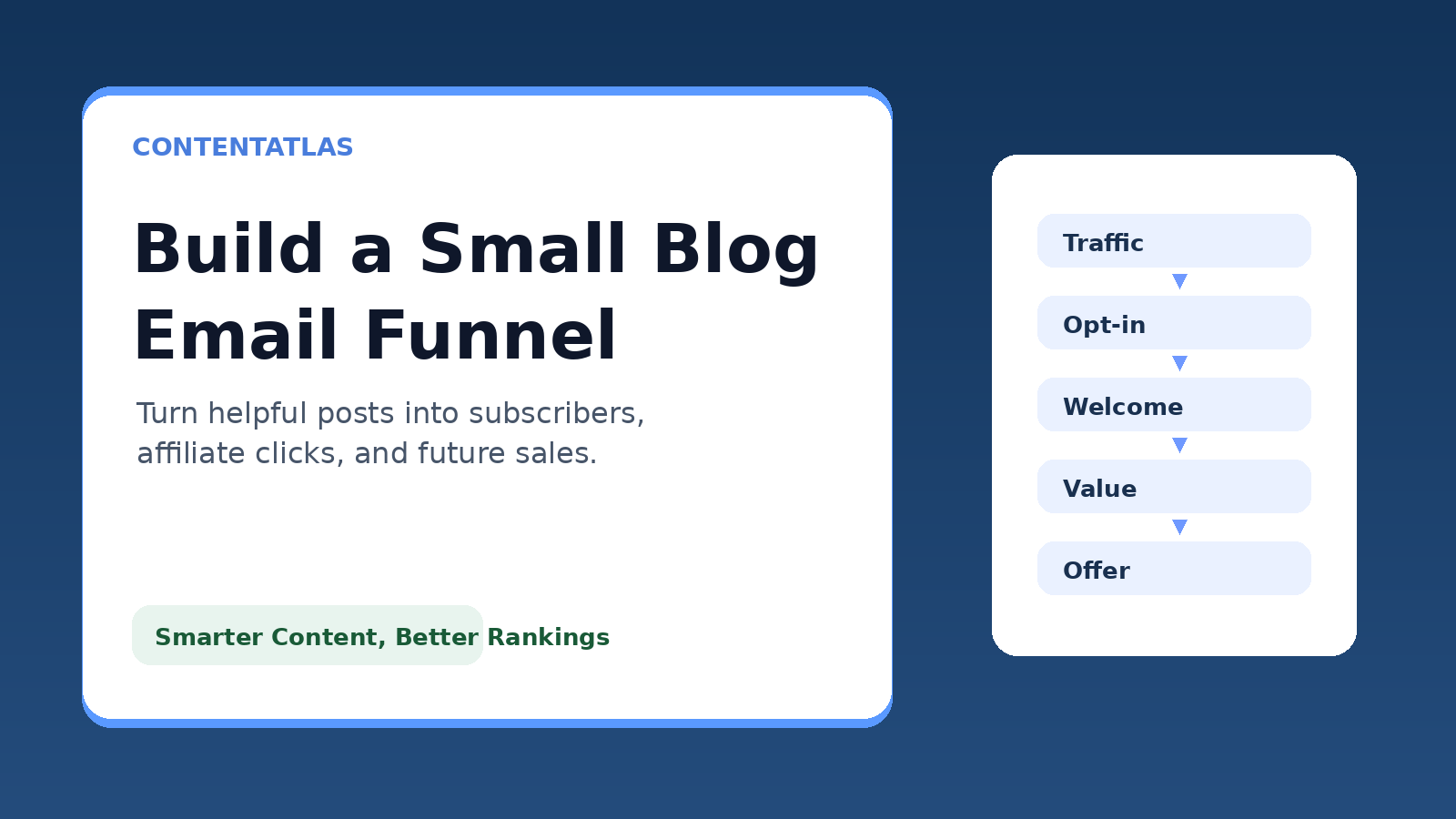
If you want more from your blog than pageviews, you need a system that turns casual readers into subscribers and subscribers into buyers. That is exactly what an email funnel for a small affiliate blog is supposed to do.
Most beginner bloggers publish helpful posts, add a few affiliate links, and hope conversions happen on their own. Sometimes they do. Most of the time, readers leave, forget the site, and never come back. An email funnel gives you a second chance to build trust, recommend the right tools, and move readers toward a useful next step.
The good news is that this does not need enterprise software, a complicated automations stack, or a 27-email sequence. A lean funnel built around one clear lead magnet, a smart opt-in, and a short welcome sequence is enough to create real monetization momentum.
Quick answer: a good small-blog funnel usually looks like this:
- Publish a post with clear search intent.
- Offer a useful lead magnet that matches that post.
- Send a short welcome sequence that solves one immediate problem.
- Introduce a relevant tool, plugin, or resource naturally.
- Send readers back to your best money pages when they are ready.
Why an email funnel matters for a small affiliate blog
Affiliate blogging is easier when readers see you more than once. Few people land on a blog, trust a stranger instantly, and buy a tool on the first visit. That is why email matters so much: it helps you extend the relationship beyond one session.
For a small publisher, email does three valuable jobs at once:
- It captures traffic value you already earned. Instead of losing readers after one pageview, you keep access to them.
- It improves monetization timing. You can recommend tools after giving context, examples, and trust signals.
- It strengthens internal linking. Your email sequence can send subscribers to your best comparison posts, setup guides, and tools pages.
That makes email one of the cleanest bridges between SEO traffic and revenue. If your site already has content that attracts beginner bloggers, a funnel helps that traffic become subscribers, affiliate clicks, and future customers.
What an email funnel for a small affiliate blog should include
A beginner-friendly funnel does not need to be complicated. In most cases, you only need five parts.
1. A traffic source with clear intent
Start with posts that attract the right people. On ContentAtlas, that usually means beginner WordPress and blogging content with an obvious tools or monetization angle. Someone reading about newsletter plugins, popup tools, or affiliate link management is already close to a purchase decision.
2. A lead magnet that solves one small problem
Your opt-in offer should match the article. A checklist, tool stack cheat sheet, plugin setup guide, or starter workflow usually works better than a vague “join my newsletter” box.
For example:
- A post about email tools could offer a “beginner email stack checklist.”
- A post about monetization could offer a “first affiliate funnel template.”
- A WordPress plugin post could offer a “blog setup toolkit” PDF or swipe file.
3. An opt-in placement that feels timely
The best opt-in usually appears where interest is highest: after the introduction, mid-post after a useful section, inside a sidebar, or as a light popup triggered by time or scroll depth. If you are still deciding on tooling, see our guide to the best popup plugins for WordPress email capture.
4. A short welcome sequence
You do not need a giant automation tree. A three- to five-email sequence is enough for most small blogs. The goal is to welcome, help, segment lightly if needed, and point readers toward your best next resource.
5. A soft offer or money-page bridge
The monetization step should feel like the natural continuation of the reader’s problem. If someone joined because they want more subscribers, your emails can point them to your popup plugin post, newsletter plugin recommendations, or a future email platform comparison page.
How to build an email funnel step by step
Step 1: Choose one entry post, not your whole site
Many bloggers overcomplicate funnel setup because they try to build one giant system for every post at once. Start with a single article that already attracts the right kind of reader. Good starting points are posts with:
- steady traffic
- commercial adjacency
- tool-selection intent
- a clear beginner problem you can solve further by email
If you already publish resource-style content, a post like How to Build a Beginner Blogger Resource Funnel is a strong model for identifying what readers should do next.
Step 2: Create a lead magnet that matches the post
Your lead magnet should save time, reduce confusion, or simplify buying decisions. That is what makes it useful and what makes it monetizable later.
Strong beginner-blogger lead magnet ideas include:
- a one-page blog tool stack for year one
- a WordPress plugin shortlist by goal
- a 5-email welcome sequence template
- a blog monetization roadmap for the first 90 days
The tighter the match between the post and the lead magnet, the higher the conversion potential.
Step 3: Pick simple email tooling you can actually maintain
Do not choose software based on advanced features you may not use for a year. Choose the platform you can set up quickly and keep consistent. If your site runs on WordPress and you are still exploring options, Best Newsletter Plugin for WordPress Beginners can help you narrow the field.
What matters most early on is the ability to:
- collect subscribers reliably
- send a short automated sequence
- tag or segment basic interests if needed
- link readers back to relevant posts and offers
Step 4: Write a short welcome sequence
A simple funnel can work with just four emails:
- Email 1: Deliver the lead magnet and explain what subscribers should expect.
- Email 2: Solve a small problem fast with one practical tip or workflow.
- Email 3: Share a useful post, case example, or tool recommendation.
- Email 4: Point subscribers to a comparison post, tools page, or monetization guide.
Keep the tone helpful. Your goal is not to force a sale. Your goal is to help the reader make progress and show them a relevant tool when it genuinely fits.
Step 5: Add one clear CTA inside the sequence
Each email does not need multiple offers. One focused call to action is usually stronger. That CTA might send readers to:
- a comparison post
- a best-tool roundup
- a WordPress plugin recommendation
- your curated blog tools page
If you have not built one yet, this guide to creating a blog tools page that actually makes affiliate sales shows how to turn a simple resources page into a stronger revenue asset.
How to connect your funnel to monetization without sounding spammy
This is where many beginner bloggers hesitate. They either avoid monetization entirely or push offers too hard too early. The better approach is to make your recommendations feel like a logical next step.
Here is the easiest way to think about it:
- Informational content builds attention.
- The lead magnet captures the relationship.
- The email sequence builds trust and context.
- The money page helps the reader choose a tool or take action.
That flow works especially well when your monetization targets are practical tools. Someone reading about lead generation can naturally be sent toward popup plugins, newsletter software, form builders, landing page tools, or email-service comparisons.
Also remember that soft monetization often outperforms aggressive selling on a small site. A recommendation framed as “here is the tool I would choose if you want the simplest setup” tends to convert better than a hard pitch.
Common mistakes that weaken small-blog email funnels
- Using a generic lead magnet. “Join my newsletter” is rarely compelling enough on its own.
- Sending too many emails too soon. Beginner audiences usually respond better to short, clear sequences.
- Promoting tools before trust exists. Lead with help, then move into recommendations.
- Ignoring on-page CTAs. Use in-content callouts and placements thoughtfully. This CTA-block guide can help you add them without making posts feel cluttered.
- Failing to guide readers somewhere specific. Every email should have a next step, even if that next step is just another useful article.
A simple funnel example for a beginner blogger
Imagine you publish a post about the best newsletter plugin for WordPress beginners.
- Post CTA: Download a beginner email setup checklist.
- Email 1: Deliver the checklist and explain the essential moving parts.
- Email 2: Show the simplest way to connect forms, email software, and a lead magnet.
- Email 3: Share a post on popup tools or opt-in strategy.
- Email 4: Recommend the best next tool based on budget and goals.
That funnel does not feel pushy because every step is aligned with the original intent. The subscriber asked for help choosing tools and growing a list. Your sequence keeps helping them do exactly that.
How this fits the rest of your site
Your funnel should not live in isolation. It works best when it connects to your site architecture.
That means linking subscribers toward:
- your best comparison posts
- your tools or resources page
- your highest-converting WordPress setup guides
- your monetization tutorials
If you are still shaping your site structure, a strong Start Here page can help route new readers toward the right content and offers faster.
Final thoughts
You do not need a massive list or a fancy automation stack to make email valuable. What you need is a simple path from reader interest to subscriber trust to relevant action.
A well-built email funnel for a small affiliate blog helps you get more from the traffic you already earn. It gives your best posts a longer shelf life, supports affiliate monetization without feeling forced, and creates the foundation for future offers, products, and recurring audience growth.
Start with one post, one lead magnet, and one short sequence. Then improve from there.
FAQ
What is the best email funnel length for a small affiliate blog?
For most beginner bloggers, three to five emails is enough. That is long enough to welcome the subscriber, teach something useful, and introduce a relevant offer without overwhelming them.
Do I need expensive software to build an email funnel?
No. A small blog can start with lightweight email software and a simple opt-in tool. The system matters more than advanced features early on.
What should I offer as a lead magnet?
Offer something that solves one clear problem tied to the page the reader is already on. Checklists, short templates, plugin shortlists, and setup guides tend to work well for beginner-blogging audiences.
How do I monetize the funnel without turning people off?
Recommend tools only when they logically fit the problem the subscriber wants to solve. Helpful recommendations inside a useful sequence usually feel more natural than a heavy sales approach.